

For many years, the area known as Historic Charlton Park was called Indian Landing.
The history of Indian Landing is intimately tied to the Euro-American expansion into the frontier of Michigan in the mid-nineteenth century and with the extinguishing of Native American land claims by the Treaty of Chicago of 1821. This land ownership transfer of frontier property from the Native American population to the federal government of the United States allowed for the sale of this land to Euro-American settlers. Initially, the native population was allowed to remain on their land, but by the 1830’s a policy of removal of native people was implemented by the federal government. While many groups were forcibly removed west of the Mississippi River, a number of Native Americans remained behind in southwest Michigan, including Thornapple Lake.
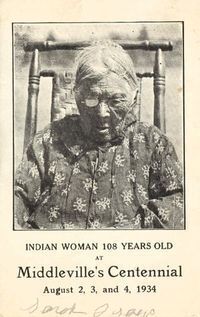
Many native families would summer at Indian Landing (sec. 25 of Hastings Township) and there were villages in both sec. 24 and 25 in 1835. The area was home to a mix of Pottawatomi, Odawa and Ojibwa. Author Charles Weissert mentions that there were well attended traditional dances held at Indian Landing where 2,000 native people were present. This was corroborated by Sarah Isaac (photo), a Potawatomi basket maker that lived to be 112 (died about 1938) who remembered attending a dance there when she was 12 (1830s).
In 1849, members of the Thornapple Band of Odawa Indians owned the property. Their names were Bahhotea, Ashquesa, Keneshewa, and Chahahhoo according to the property’s title.* They permitted Reverend Manasseh Hickey, an Episcopal Methodist minister, to build a mission on their land. The mission was a 30 ft , two room log cabin with an alley and shared fireplace. In 1853, a log schoolhouse was built here at the request of the Native Americans.
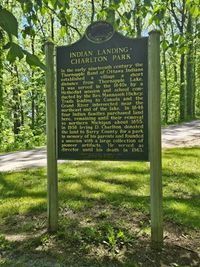
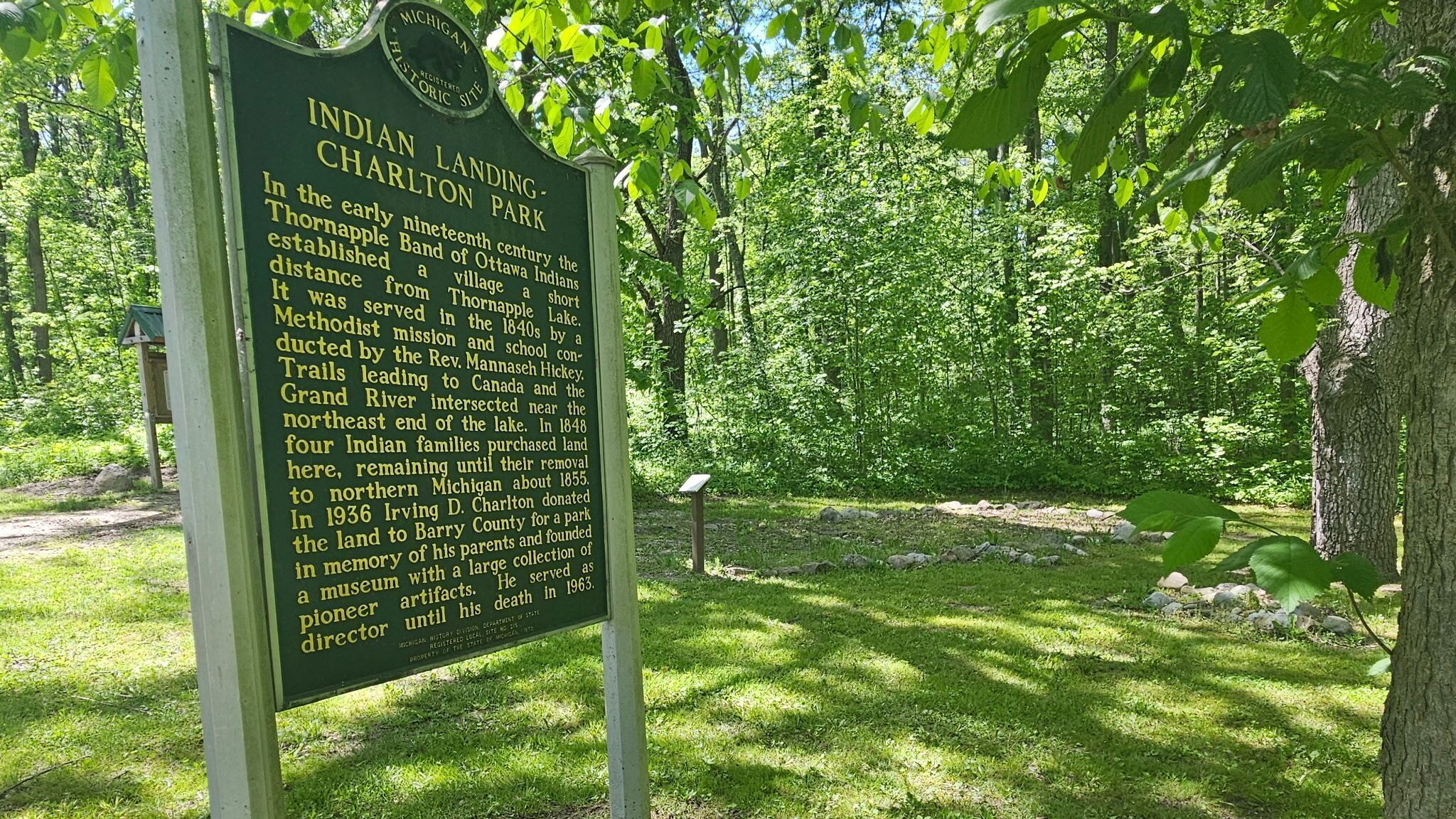
In 1972, Indian Landing was placed on the Michigan Historical Register in recognition of its first Native American inhabitants.
Marker Text: In the early nineteenth century the Thornapple band of Ottawa Indians established a village a short distance from Thornapple Lake. It was served in the 1840s by a Methodist mission and school conducted by the Reverend Mannaseh Hickey. Trails leading to Canada and the Grand River intersected near the northeast end of the lake. In 1848 four Indian families purchased land here, remaining until their removal to northern Michigan about 1855. In 1936 Irving D. Charlton donated the land to Barry County for a park in memory of his parents and founded a museum with a large collection of pioneer artifacts. He served as director until his death in 1963.
After Irving Charlton donated 210 acres of land to Barry County, which comprised Indian Landing, he encouraged the Native American community to use the site. They held Homecoming celebrations from 1937-1961, which included traditional arts and dances. A new Pow Wow – Walk In The Spirit, ran annually from 1994-2015 when the organizers discontinued the event.
*Names listed as they appear on the title, spelling may vary.
Next: Village and Museum
-
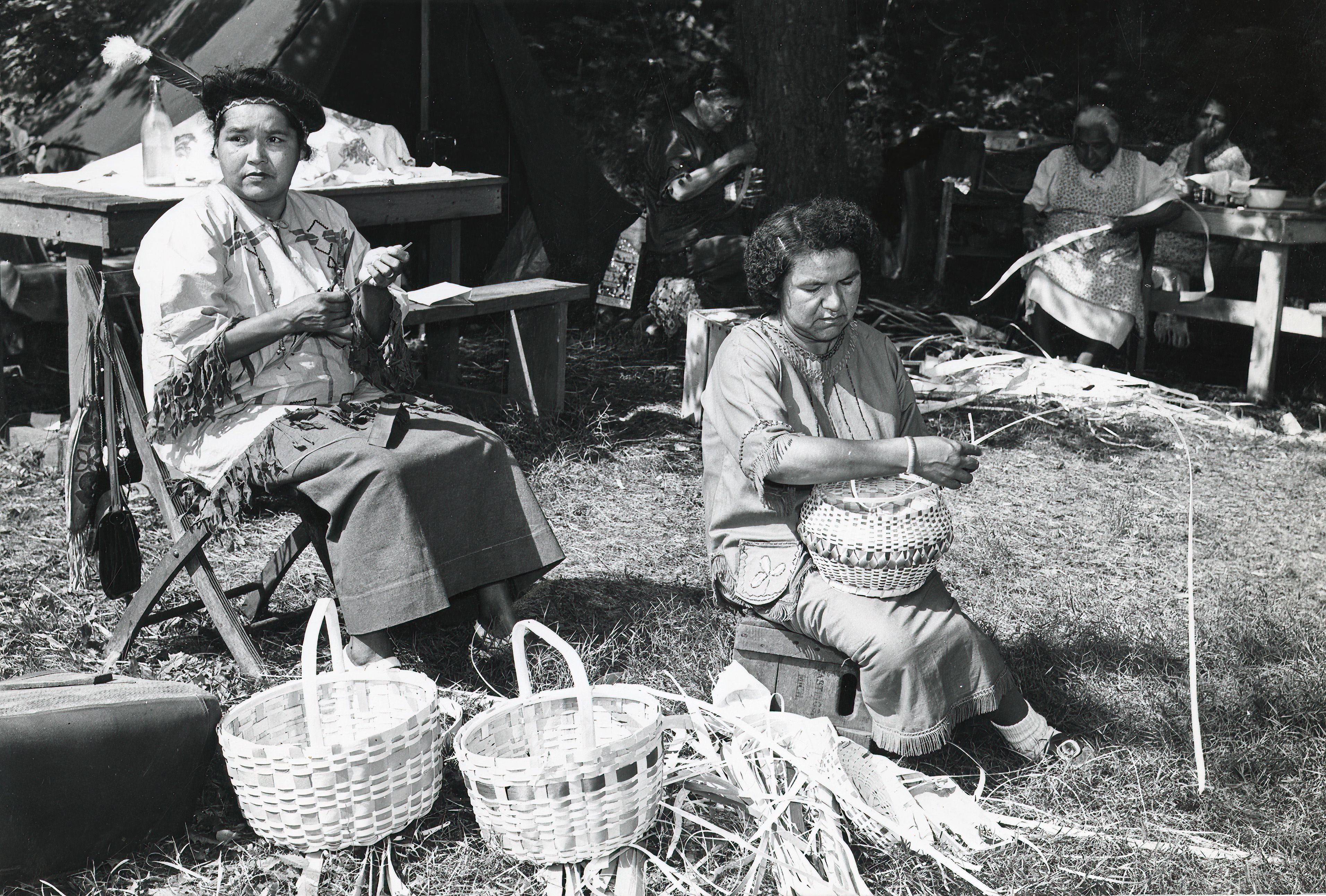 Basket Makers at Homecoming
 -
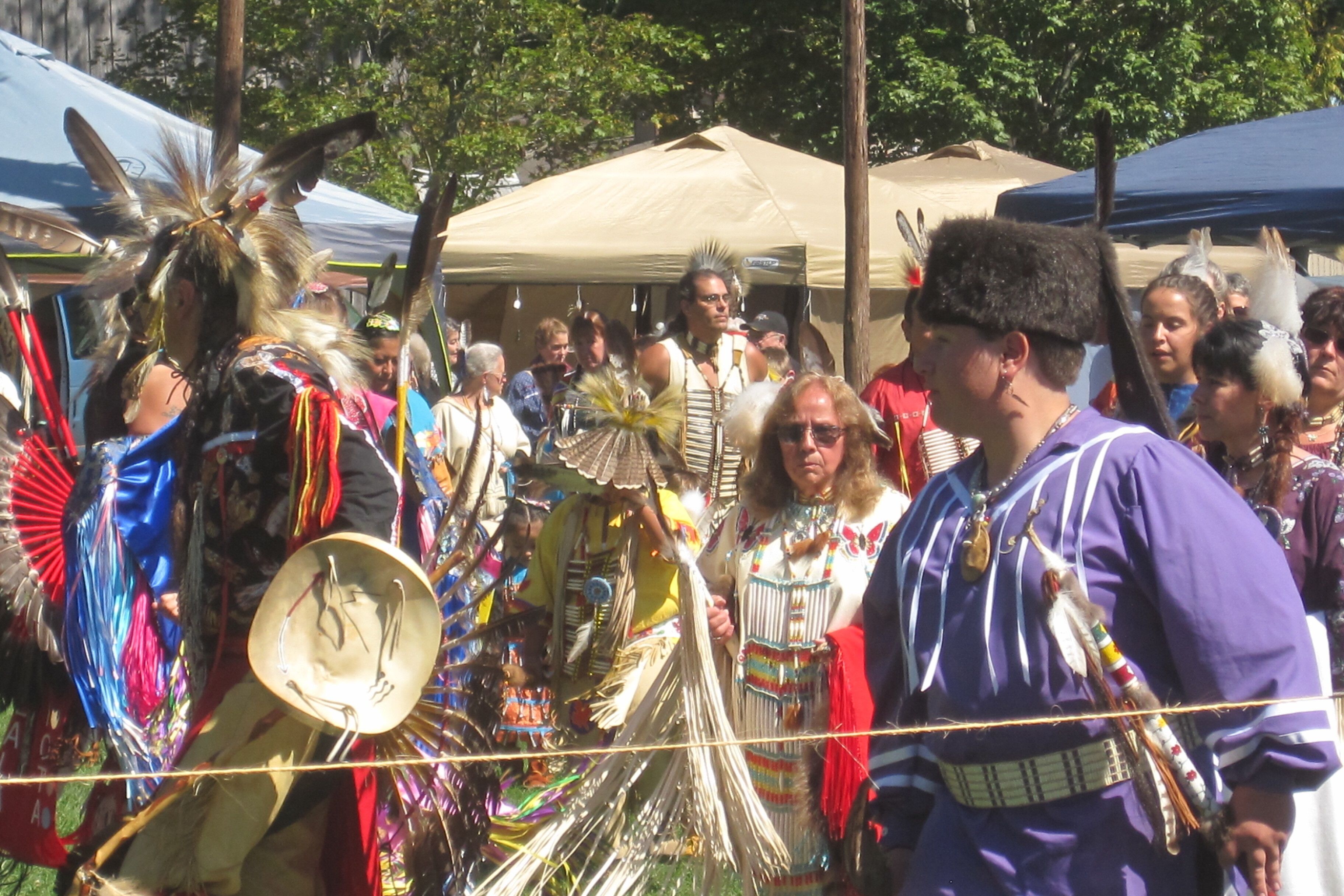 Walk In The Spirit
